Colored Polyester Cotton Yarn: What Workwear, Shirting and Knit Buyers Should Sp
For workwear, school uniforms, shirting, and everyday knit tops, colored polyester cotton yarn gives fabric makers a practical middle ground: the strength and easy care of polyester, the comfort of cotton, and a shade that is built into the yarn before the fabric is made. Instead of weaving or knitting greige cloth and dyeing two different fibers afterward, the mill delivers the yarn already in color, so the fabric process is shorter and lot-to-lot shade is easier to hold.
This article explains how buyers usually specify colored TC yarn, where each count and spinning route fits, and what to agree with the spinning mill before bulk production.
Why Colored Polyester Cotton Yarn Is Spun in Color
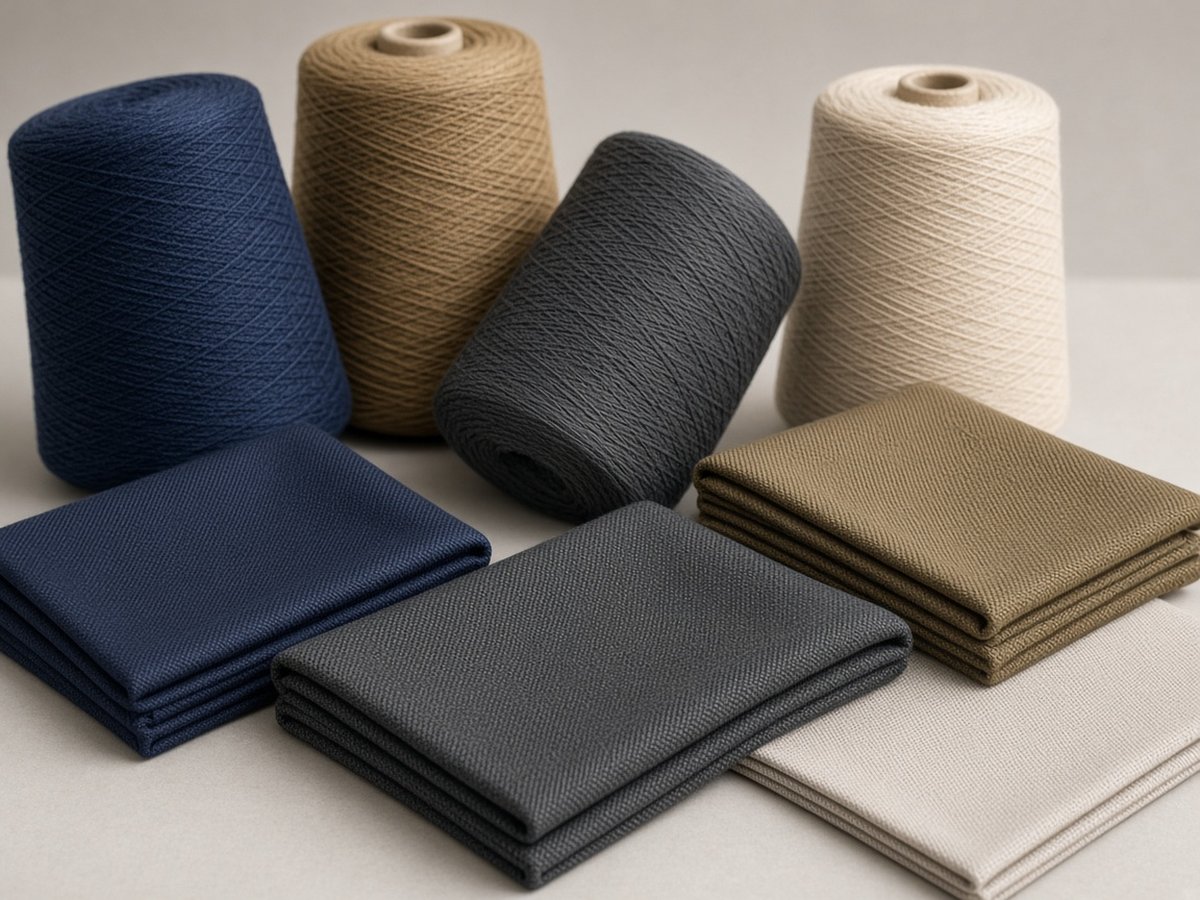
Piece-dyeing a polyester/cotton fabric is a two-part job, because polyester and cotton take different dye classes. Each extra bath adds water, energy, time, and another chance for the two fibers to finish in slightly different tones. Colored spinning moves that work upstream. The polyester component is dope dyed, meaning pigment is added while the staple fiber is produced, and it is then blended with cotton and spun to count. Jiangyin Tonghe Yarn Industry Co., Ltd runs its own chemical fiber plant, so the colored polyester fiber used in its blends is controlled from the start rather than bought in as an unknown lot.
For the buyer, this usually means three things: solid shades and melange (heather) effects that repeat well on reorders; good washing and rubbing fastness on the polyester side, which matters for garments that are laundered often; and a faster route from yarn to finished fabric.
Choosing the Blend Ratio and Count
Blend ratio. 65/35 polyester/cotton is the most widely used T/C blend and the main ratio on the mill's product list. It gives a stable, hard-wearing fabric with low shrinkage and a neat appearance after washing, which is why it is common in workwear and uniform shirting. For heavier, more economical yarns, a 50/50 polyester/cotton blend is also offered in open end form. Tell the mill which property matters most (durability, softness, or cost), and confirm the agreed ratio on the cone label and test report.
Count. Typical options on thyarn.com include:
- Ne 20/1 65/35 polyester/cotton ring spun yarn, in raw white and color, for knitting and weaving. Ne 20/1 is a common count for single jersey, polo pique, and medium-weight woven fabrics.
- Ne 30/1 65/35 polyester/cotton vortex yarn, in white and dope dyed colors, for cleaner, finer fabrics.
- Ne 12/1 open end polyester/cotton yarn and Ne 0.5 50/50 polyester/cotton open end yarn for coarse counts used in heavier woven goods and home textiles.
The mill's colored-yarn program covers electronically cleaned, spliced knotless yarn from 10 to 60 Ne, so finer shirting counts can be discussed against a sample.
Matching the Spinning Method to the End Use
The same colored TC blend behaves differently depending on how it is spun:
- Ring spun (ring spun yarn range) gives the softest hand and the widest count range. It suits knit tops, shirting, and uniforms where comfort matters.
- Vortex (vortex yarn range) produces a yarn with low hairiness, which helps reduce pilling and keeps the fabric face clean after repeated washing, useful for workwear and school polos.
- Open end (open end yarn range) is the economical route for coarse counts, heavy twills, canvas-type fabrics, and home textiles.
Getting the Shade Right
Colored TC yarn is ordered against a color standard, so send a physical swatch, a Pantone reference with a fabric sample, or a target garment. Say whether you need a solid shade or a melange effect, and whether the yarn will be knitted or woven, because the same yarn can look different in jersey and in a twill. A sample cone, and if possible a knitted or woven panel, should be approved before bulk spinning. Jiangyin Tonghe Yarn Industry Co., Ltd works on a multi-variety, small-batch basis with rapid sampling, which helps when a uniform program needs several coordinated colors.
What to Confirm Before a Bulk Order
Beyond the price per kilogram, ask for evenness, neps, hairiness, and strength data on the exact count and blend; confirm knotless winding (the mill uses fifth-generation Savio automatic winders, which reduce hairiness and downstream breaks); and agree on lot traceability so reorders can be matched. Standard packing is PP woven bags or cartons, shipped by sea, land, or air. Minimum order quantity and delivery time are confirmed case by case, and payment is usually by T/T or L/C.
Founded in 1995 in Jiangyin, Jiangsu, Jiangyin Tonghe Yarn Industry Co., Ltd specializes in dope dyed color and melange yarns for knitting and weaving, with polyester, polyester-viscose, and polyester-cotton as core lines among more than 1,000 dyed yarn varieties. Its yarns supply garment and knitting exporters across China and are exported to Southeast Asia, the Middle East, Europe, and the Americas.
If you are planning a workwear, uniform, or knit program, send the target shade, blend, count, and end use through the contact page, by email to sales@thyarn.com, or on WhatsApp at +86 18800588573. Locking these points into the first order is the simplest way to make colored polyester cotton yarn perform the same in every bulk lot as it did in the approved sample.