
Polyester Viscose Melange Yarn: How Heather Shades Are Built
Heather grey sweaters, charcoal knit tops, oatmeal cardigans and marled socks all share one look: tiny points of different colors that blend into a soft, natural shade. Many fabric mills get that look with polyester viscose melange yarn, a TR blend spun from fibers that are already colored before they meet the spinning frame. Because the effect is built into the yarn, the fabric comes off the knitting machine finished in shade, without a later dye bath.
This guide explains how a melange shade is built inside a TR yarn, which blends and counts buyers usually choose, and what to write on the order sheet so every lot looks like the approved sample.
How Polyester Viscose Melange Yarn Gets Its Heather Look
A solid dope dyed yarn uses fiber of one color. A melange yarn mixes fibers of two or more colors, for example dark dope dyed polyester with lighter polyester and viscose, before carding and drawing. The fibers stay separate in color, so the eye reads a mixed, heathered surface instead of a flat tone.
The shade depth comes from the recipe. More dark fiber gives a deeper charcoal; less gives a light grey or a pale heather. Warm heathers such as beige, oatmeal and camel use brown or tan fiber in the mix, and colored heathers, such as teal or blue marl, follow the same principle. Jiangyin Tonghe Yarn Industry Co., Ltd runs its own chemical fiber plant, so the colored polyester fiber in the recipe is controlled from the fiber stage, which helps the same heather come back on repeat orders.
Choosing the Blend: 65/35, 70/30 or 80/20 TR
The blend ratio changes both the hand and how the heather reads on fabric.
65/35 polyester/viscose is the most common TR blend. The higher viscose share gives a softer, more absorbent fabric with good drape, which suits sweaters, knit tops and casual T-shirts. Ne 20/1 65/35 polyester/viscose yarn is a typical ring spun knitting count for this blend.
70/30 sits in between and is often used in summer knitwear where a little more strength is wanted without losing softness.
80/20 carries more polyester, so the yarn is stronger and the fabric keeps its shape better. It is chosen for finer, leaner fabrics and for programs that are washed often. See Ne 30 80/20 polyester/viscose siro compact yarn.
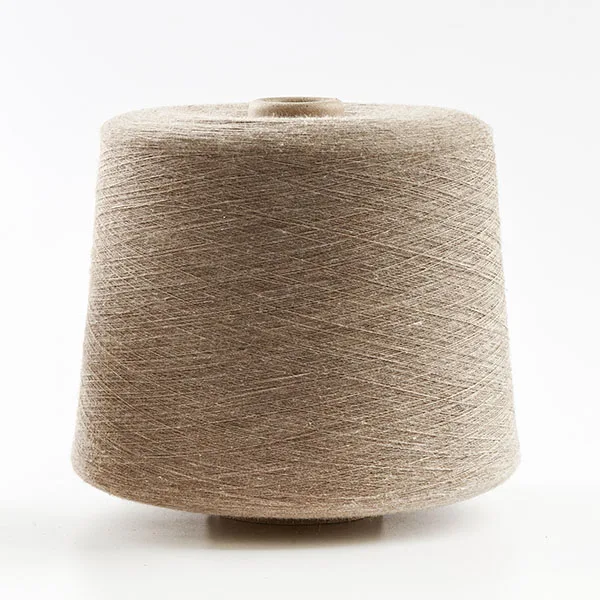
Count and Spinning Route
Most melange TR programs fall in the mid-count range. Ne 16 to Ne 30 covers sweaters, socks, sweatshirts and jersey, while finer counts up to around Ne 40 suit lighter tops. The spinning route also changes how the heather looks:
- Ring spun gives the softest hand and the most natural heather, and covers the widest count range.
- Siro compact reduces hairiness, so the color points look crisper and the fabric face is cleaner. Ne 30 65/35 polyester/viscose siro compact color yarn is offered in solid and melange shades.
- Vortex gives a smooth, low-pilling surface, useful for garments that must keep a clean look after washing. See Ne 30 65/35 polyester viscose vortex yarn.
What to Put on the Order Sheet
A heather name such as "light grey" means something different to every buyer, so specify the yarn with a physical standard:
- Shade standard: a fabric swatch, garment or earlier cone, judged under an agreed light source.
- Blend and count: for example Ne 20/1 65/35 TR, ring spun.
- Melange depth: whether the target is light, medium or dark heather, or a warm or colored heather.
- End use and machine: circular knitting, flat knitting, hosiery or weaving.
- Lot control: keep each lot together on the knitting floor and mark lot numbers on every carton or bag, because mixing lots in one garment shows up as shade bars.
Approve a sample cone, and ideally a knitted panel, before bulk spinning. Regular heathers can be supplied from stock; for a custom melange, the minimum quantity and delivery time are confirmed with the mill case by case.
Jiangyin Tonghe Yarn Industry Co., Ltd, founded in 1995 in Jiangyin, Jiangsu, China, is a colored spun yarn mill specializing in dope dyed and melange yarns, with polyester, polyester-viscose and polyester-cotton as its core lines. To develop a heather program, send your shade standard, blend, count and end use through the contact page, by email to sales@thyarn.com, or on WhatsApp at +86 18800588573. A melange shade that is fixed in the fiber recipe and written clearly into the order sheet is the most reliable way to make polyester viscose melange yarn look the same from the first lot to the last.
FAQ
What is the difference between melange yarn and solid dope dyed TR yarn?
Solid dope dyed TR yarn uses fiber of one color. Melange yarn blends fibers of different colors before spinning, which creates the heather effect.
Which blend is best for heather sweaters?
65/35 TR is the usual choice for a soft, absorbent hand. 80/20 is chosen when more strength and shape retention are needed.
Can you match my existing heather shade?
Yes. Send a swatch, garment or yarn cone along with the count and end use, and a sample will be made for approval before bulk.