
Booking School Uniform Yarn Before the New Term Begins
In Brazil, Peru, Chile and Argentina the school year starts in February or March, so uniform fabric is knitted and woven in the months before. For fabric mills supplying those programs, now is the time to lock in school uniform yarn. Most uniform programs run on a narrow palette of black and heather grey, and most of the yarn is polyester-cotton (TC), because the blend balances durability, easy care and a cotton-like feel.
Why TC Blends Lead in School Uniform Yarn
A uniform is worn most days and washed several times a week. Polyester brings strength, abrasion resistance and quick drying; cotton adds breathability and a softer touch against the skin. 65/35 polyester/cotton is the familiar standard for polos, shirts and knit tops. 80/20 carries more polyester and suits trousers, skirts and pinafores that take the hardest wear and need to hold their shape. Our earlier article on where 80/20 polyester cotton yarn fits compares the two ratios in more detail.
Colored spun TC yarn takes its color at the fiber stage, as dope dyed or fiber-dyed colors, so the fabric does not need piece dyeing. Heather grey is a melange of pre-colored and undyed fibers, which gives the soft, flecked look that a piece-dyed fabric cannot copy.
Matching the Count to Each Garment
- Knitted polos and PE T-shirts: Ne 24/1 T/C 65/35 ring spun yarn is a common count for jersey and pique. Ne 30/1 65/35 polyester/cotton vortex yarn gives a cleaner, low-hairiness surface for knits that are washed often.
- Shirts and lighter uniform fabrics: Ne 40/1 T/C 80/20 ring spun yarn for finer, lighter uniforms and shirting, or Ne 32/1 T/C 65/35 siro compact yarn, shown in charcoal heather, for casual shirting and bottoms.
- Trousers, skirts and pinafores: Ne 16/1 T/C 80/20 ring spun yarn, a coarse count listed for workwear and uniforms.
- Heavier knits and track tops: Ne 20/1 T/C 65/35 open-end yarn, shown in black, a mid-count rotor yarn for knitting and weaving.
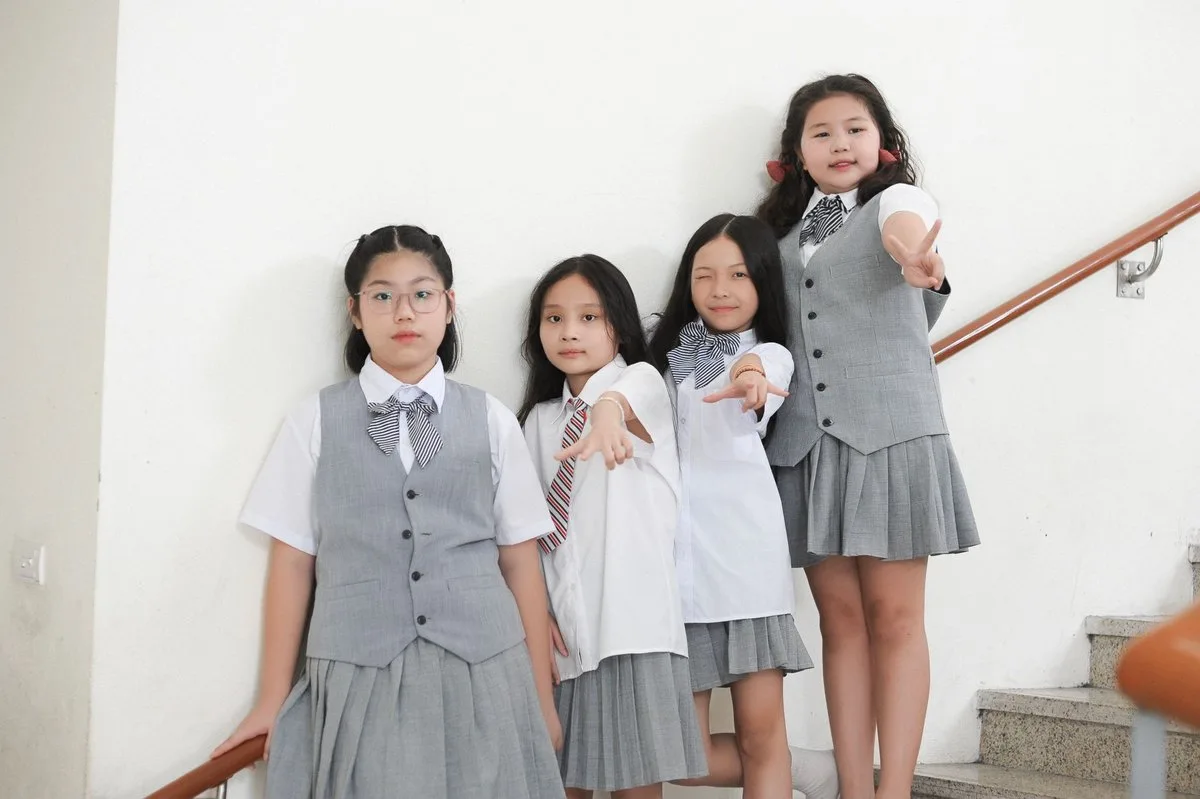
Keeping Black and Grey Consistent Across the Whole Uniform
A school often buys its polo, sweater and trousers from different fabric suppliers, but parents notice at once when the greys do not match. Shade numbers help. The heather grey scale runs from shade 1, the lightest, to shade 7, the darkest, alongside solid black. As a rough guide, mid greys around shades 4 and 5 are common for knit tops, while darker shades 6 and 7 suit trousers and skirts that should hide marks. The article which grey, which route explains the scale in more depth.
Write the shade number on every enquiry and send a physical standard, such as a fabric swatch from last year's uniform. The mill matches to that standard. Keep the same count, blend and spinning route on reorders: a 65/35 and an 80/20 in the same grey can look slightly different on fabric, and so can ring spun and vortex yarn.
Jiangyin Tonghe Yarn Industry Co., Ltd, founded in 1995 in Jiangyin, Jiangsu, China, is a specialist colored spun yarn mill with its own fiber plant. It produces dope dyed and melange yarns, mainly polyester, polyester-viscose (TR) and polyester-cotton (TC), in ring spun, siro compact, vortex and open-end versions, so one mill can cover the knit and woven parts of a uniform.
Planning the Order
- List the garments first: polo, shirt, sweater, trousers or skirt, with the fabric construction for each.
- Fix the shade early: black, or a grey shade number with a standard.
- Sample before bulk: approve sample cones, then knit or weave a panel and run your own wash checks.
- Confirm quantities: regular colors in stock with no MOQ; custom colors usually from 10 tons.
Yarn is packed in PP woven bags or cartons, payment is by T/T or L/C, and goods ship by sea, land or air. Some programs prefer a softer viscose hand in knitted tops; for that route, see 5 things knit mills should know about TR vortex yarn.
To book shades for next term, send your garment list, counts and grey standard to Jiangyin Tonghe Yarn Industry Co., Ltd through the contact page, by email to sales@thyarn.com, or on WhatsApp at +86 18800588573.
FAQ
Which blend works best for school trousers?
Many mills use 80/20 polyester/cotton for hard-wearing trousers and skirts, and 65/35 where a more cotton-like feel is wanted. Confirm with a woven panel.
Can you match our school's grey?
Yes. Send a swatch or yarn sample and the target shade number. Regular colors in stock with no MOQ; custom colors usually from 10 tons.
Ring spun, vortex or open-end?
Ring spun gives a soft hand and the widest count range, vortex gives a clean, low-hairiness knit surface, and open-end suits coarser, heavier fabrics.